The best window treatments for sliding glass doors are Hunter Douglas Luminette® Privacy Sheers, panel-track systems that glide flat fabric panels along a rail, vertical cellular shades, and custom drapery. Each one moves side to side the way the door does, stacks out of the way, and covers a wide span cleanly. The right pick depends on three things: how often the door gets used, what is on the other side of the glass, and where the sun hits.
New England gave us some of the best walls of glass anywhere: lake houses on Winnipesaukee, coastal places on Cape Cod, great rooms that frame a treeline. A slider or a picture-window wall is usually the biggest opening in the house, which makes it the biggest glare problem, the biggest heat-loss problem, and the biggest privacy question all at once. It deserves better than the builder-grade vinyl it probably came with.
Why do old vertical vinyl blinds disappoint?
You know the ones. The vanes yellow in the sun, they warp, they clatter every time the heat kicks on or the door slides, and sooner or later one carrier breaks so a single vane hangs crooked forever. Cheap vinyl verticals date a room the way shag carpet does. They were the default in the eighties because nothing better existed for wide openings. Better exists now.
What should I use instead?
Hunter Douglas publishes a buyer's guide for sliding glass door treatments, and the four options below are the ones from it that I install most across New England.
Luminette® Privacy Sheers
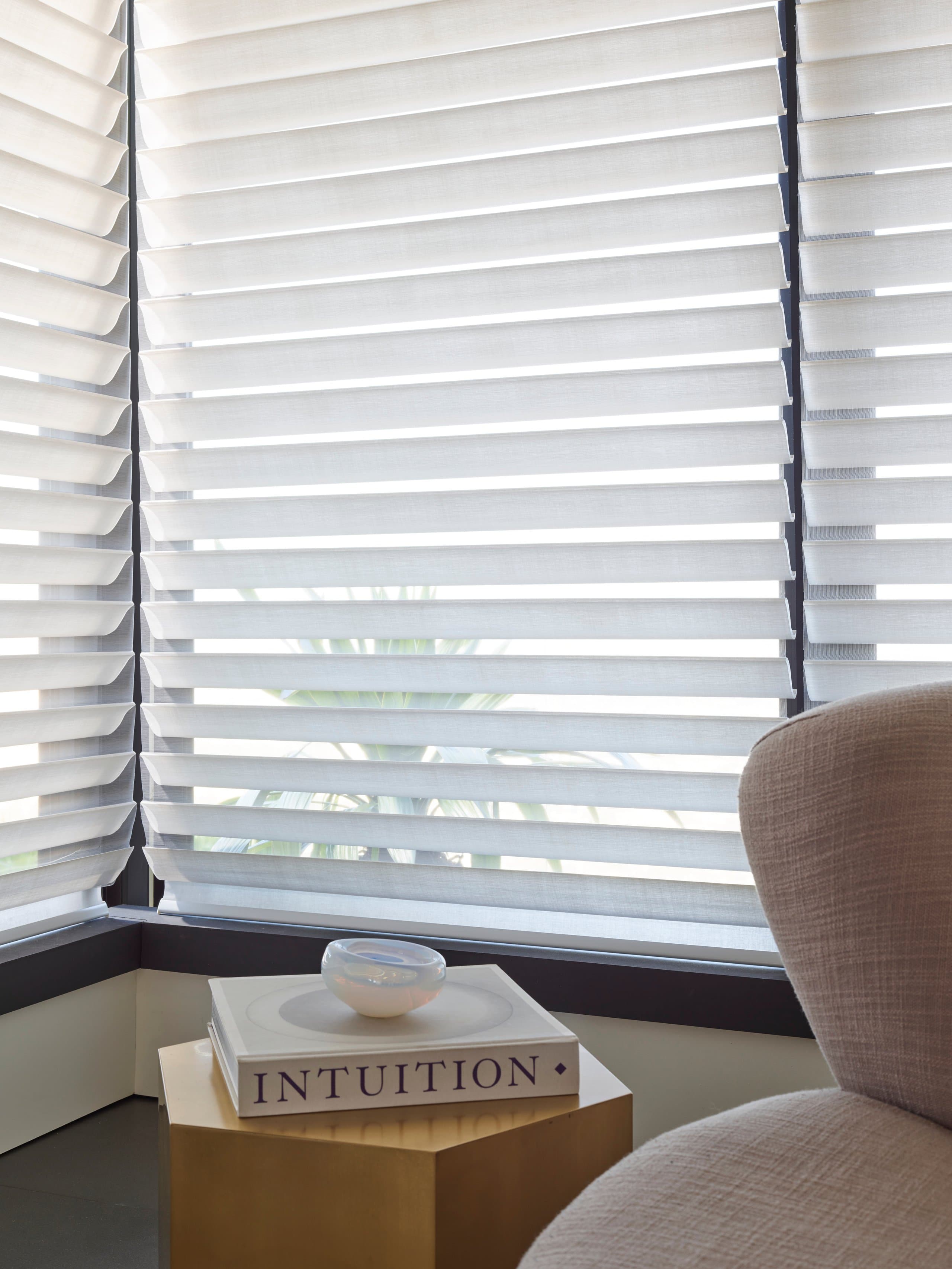
Luminette® Privacy Sheers are what made people forget vertical blinds. Soft sheer fabric hangs like a drape, with rotating vanes inside it, so you swing from an open view to soft filtered light to full privacy. On a lake or ocean view they are sunglasses for your windows: the glare off the water disappears and the view stays.
Panel-track gliding panels
Hunter Douglas Skyline® Gliding Window Panels run large flat fabric panels along a rail. The look is clean and modern, the panels stack tight to one side, and they handle very wide spans with ease. If your house leans contemporary, this is usually my first suggestion.
Vertical cellular shades
This is the honeycomb shade turned on its side: the same air-trapping cells that insulate a window, built to traverse a door. A big slider leaks a lot of heat in a New England winter, and a vertical cellular shade is the option that actually does something about it. It stacks into a compact column when you want the whole opening clear.
Custom drapery
Drapery is the classic for a reason. Full-height panels soften a big glass wall, block the light when you want it, and layer beautifully over a sheer or a cellular shade. For a formal room or a dramatic two-story window, custom drapery is still the most beautiful answer there is.
How do I choose between them?
- Ask how often the door opens. A daily-use slider needs a treatment that stacks fully clear of the opening, so nothing gets pushed through or caught.
- Ask what the glass looks out on. A water view or a wooded lot deserves a sheer that keeps the view. A neighbor's driveway makes privacy the priority.
- Ask where the sun comes from. West-facing glass takes hard afternoon glare and UV that fades floors, so light control leads. North-facing glass can go softer.
- Ask if the room runs cold in winter. If you can feel the slider from the couch in January, insulation matters, and that points to vertical cellular.
What about tall windows and whole walls of glass?
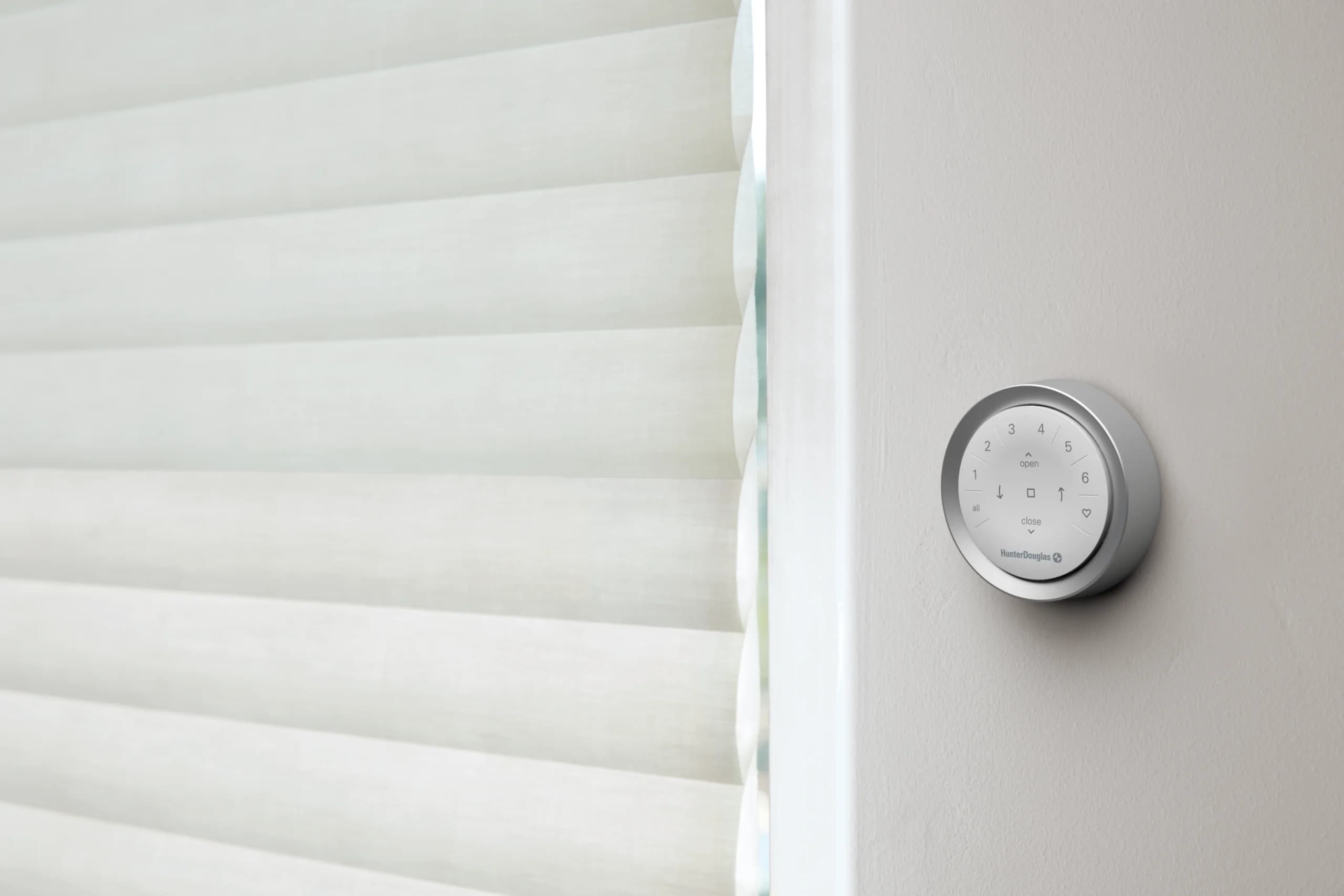
The bigger the treatment, the stronger the case for PowerView® Automation. A wide bank of panels or a two-story drape glides open at the touch of a button or on a schedule, with no wand to crank and no cord to haul. On tall great-room glass, motorization is the difference between a treatment you use every day and one you gave up on by February.
If you have a slider or a wall of glass wearing tired vinyl, let me show you what it could look like instead. I come to you, measure the actual opening, and hold real fabric in your real light. Request a free in-home consultation or call me at (603) 891-5755.
The PowerView® App is required for programmed operation.