Here is the difference in one breath. Blinds are hard slats of wood, faux wood, or metal that tilt open and closed. Shades are soft fabric that raises, lowers, or glides across the window. Shutters are hinged, louvered panels mounted to the window itself, like a piece of millwork. Blinds give you precise light control at an approachable price, shades give you softness and insulation, and shutters give you permanence. The right answer depends on the room, and I will walk you through it room by room.
I have spent more than thirty years helping New England homeowners make this exact choice, and I can tell you the most expensive option is not automatically the right one. My job is to match the treatment to the room, the light, and the way you live in it.
What is the difference between blinds, shades, and shutters?
The table below is how I explain it at a consultation. Read the row that matches what you care about most, whether that is light, warmth, moisture, or how long it lasts.
| Treatment | What it is | Best for | Light control | Lifespan feel |
|---|---|---|---|---|
| Blinds | Hard slats of wood, faux wood, or metal that tilt open and closed | Kitchens, baths, home offices, budget-minded rooms | Precise. Tilt the slats to aim daylight exactly where you want it | Solid for years. Quality faux wood shrugs off moisture; cheap vinyl warps and yellows |
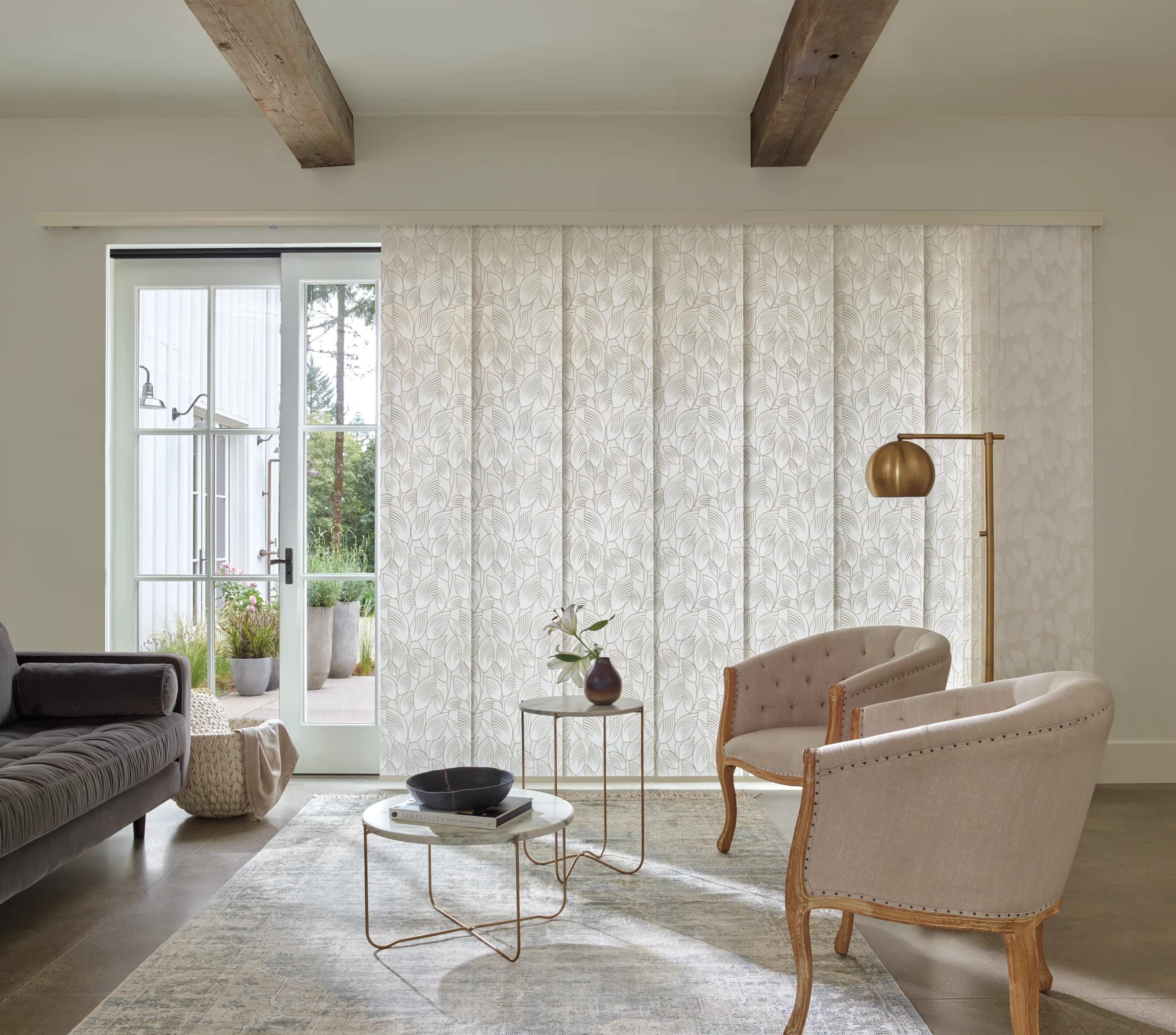
| Shades | Soft fabric that raises, lowers, or glides, from sheer to room darkening | Bedrooms, living rooms, any room where comfort and insulation matter | The widest range of the three, set by your fabric and opacity choice | Excellent with quality fabric, and built to be repaired rather than thrown away |
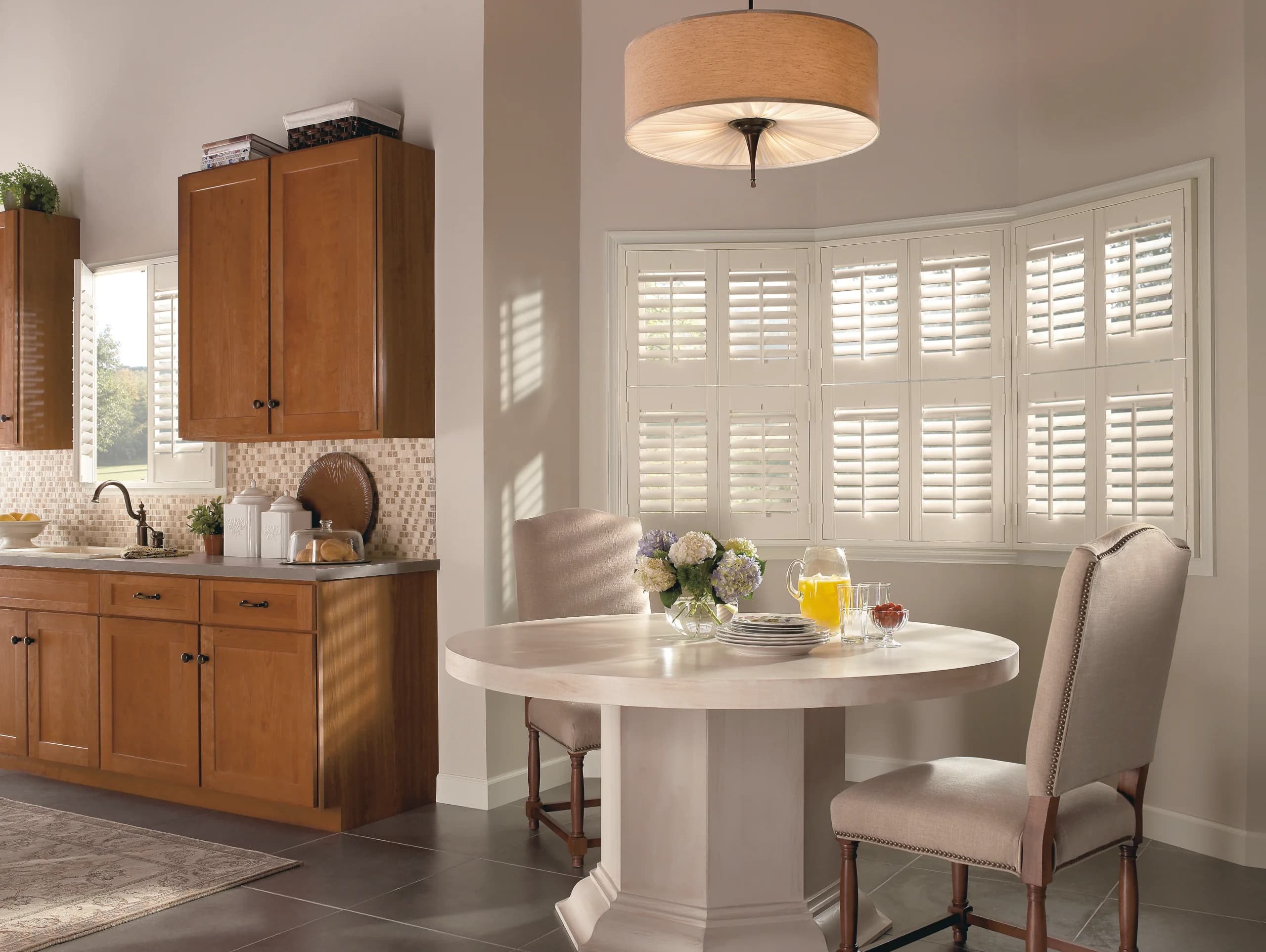
| Shutters | Hinged, framed panels with louvers, mounted to the window like millwork | Formal rooms, coastal homes, anyone thinking about resale | Strong. Louvers tilt like blinds and the panels swing fully open | The longest of the three. Shutters read as part of the house itself |
Which is right for a bedroom?
A shade, almost every time. Bedrooms need darkness for sleep and warmth in winter, and a honeycomb shade with a room-darkening fabric delivers both. Nothing tilts, nothing rattles, and the fabric hushes the room. For kids' rooms I spec them cordless as a matter of course.
Which is right for a kitchen or bathroom?
This is where moisture makes the call. Steam and humidity are hard on delicate fabrics, so over a sink or a tub I reach for faux wood blinds or Hunter Douglas Palm Beach™ Polysatin™ Shutters. Both wipe clean with a damp cloth and neither cares how long your shower runs.
Which is right for a living room?
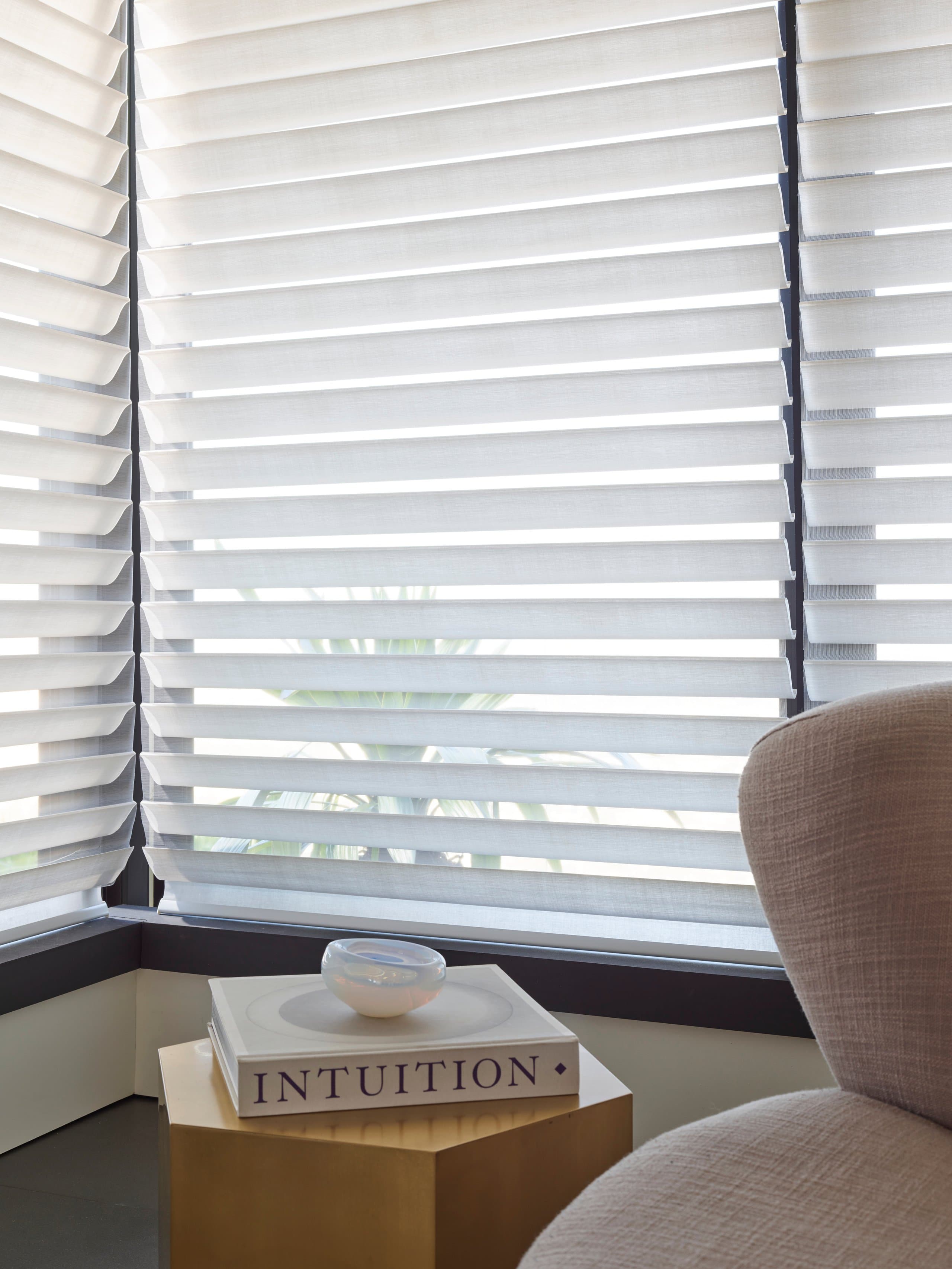
The living room is where light does the most work, so I let the light decide. If you love bright daylight but hate glare, Hunter Douglas Silhouette® Window Shadings shape the sun beautifully. If the house leans traditional or coastal, shutters give the room a finished, architectural feel. Both are right answers; they are just different rooms to live in.
Which adds the most long-term value?
Shutters have the strongest claim. They mount to the window itself, they stay with the house when you sell, and buyers read them as a built-in feature rather than a furnishing. That said, the treatment that adds the most value to your life is the one matched to the room. A blackout shade in the bedroom of a night-shift nurse is worth more than any shutter.
How do I decide without guessing?
- Start with the room's job: sleep, cooking, bathing, gathering. The job narrows the field fast.
- Then the light: do you want to aim it, soften it, or block it?
- Then moisture: kitchens and baths rule out delicate fabrics on their own.
- Then the house itself: a 1780 colonial and a new lake house want different things.
- Then budget, honestly. There is a right answer at every price point, and I will tell you which one it is.
You do not have to sort this out from a website. I bring the samples to you, hold them in your own windows, and tell you which of the three actually fits each room. Request a free in-home consultation or call me at (603) 891-5755.