Yes, for a lot of people blackout shades make a real difference. Peer-reviewed research shows that light in the bedroom at night disrupts your circadian rhythm and interferes with melatonin, the hormone that tells your body it is time to sleep. A true blackout shade removes that light at the source, so the room stays dark until you decide otherwise.
I have put blackout shades into hundreds of New England bedrooms, and the note I get afterward is almost always the same: I did not know this room could get that dark. So let me cover what the science supports, who benefits most, and the honest difference between room darkening and blackout.
What does the science say about light and sleep?
Researchers on the Sister Study, a large study of women's health published through the National Institutes of Health, reported that exposure to artificial light at night likely causes circadian disruption, and that late-night light exposure is associated with reduced melatonin. In that study, women who slept with a light or a television on had more short sleep and more insomnia symptoms than women who slept in the dark.
WebMD's consumer overview of blackout curtains puts it in plain terms: keeping light out of the bedroom prevents it from disrupting melatonin production, which helps you fall asleep faster and stay asleep longer. None of this is fringe science. Darkness is one of the strongest sleep signals your body has, and your windows are where the light gets in.
Who benefits most from blackout shades?
- Light sleepers. If a streetlight, headlights, or a neighbor's porch light wakes you, a blackout shade solves it at the window instead of with an eye mask.
- Night-shift workers. Nurses, first responders, plant workers. Sleeping at 9 a.m. requires a room your body believes is nighttime.
- Kids and nap schedules. A genuinely dark room makes a 1 p.m. nap possible in July, and a 7 p.m. bedtime possible before sunset.
- Anyone in New England in June. The summer sun comes up around 5 a.m. here. Your alarm should decide when your day starts, not the sunrise.
What is the difference between room darkening and blackout?
They are different products, and the industry blurs the two. Room-darkening fabrics block most light but let a soft glow through. Blackout fabrics block essentially all light through the fabric itself. Room darkening is the right call for most adults who want a restful room that still hints at morning. True blackout is the right call for shift workers, nurseries, and anyone whose sleep is fragile. I will tell you which one your situation actually needs, because selling a night nurse a room-darkening shade helps nobody.
One more honest note: even a blackout fabric leaks light around its edges, because a shade needs a little clearance to move inside the window frame. That thin halo around the shade is called the light gap, and it is the part most blackout products never solve.
How do you get true blackout without the light gap?
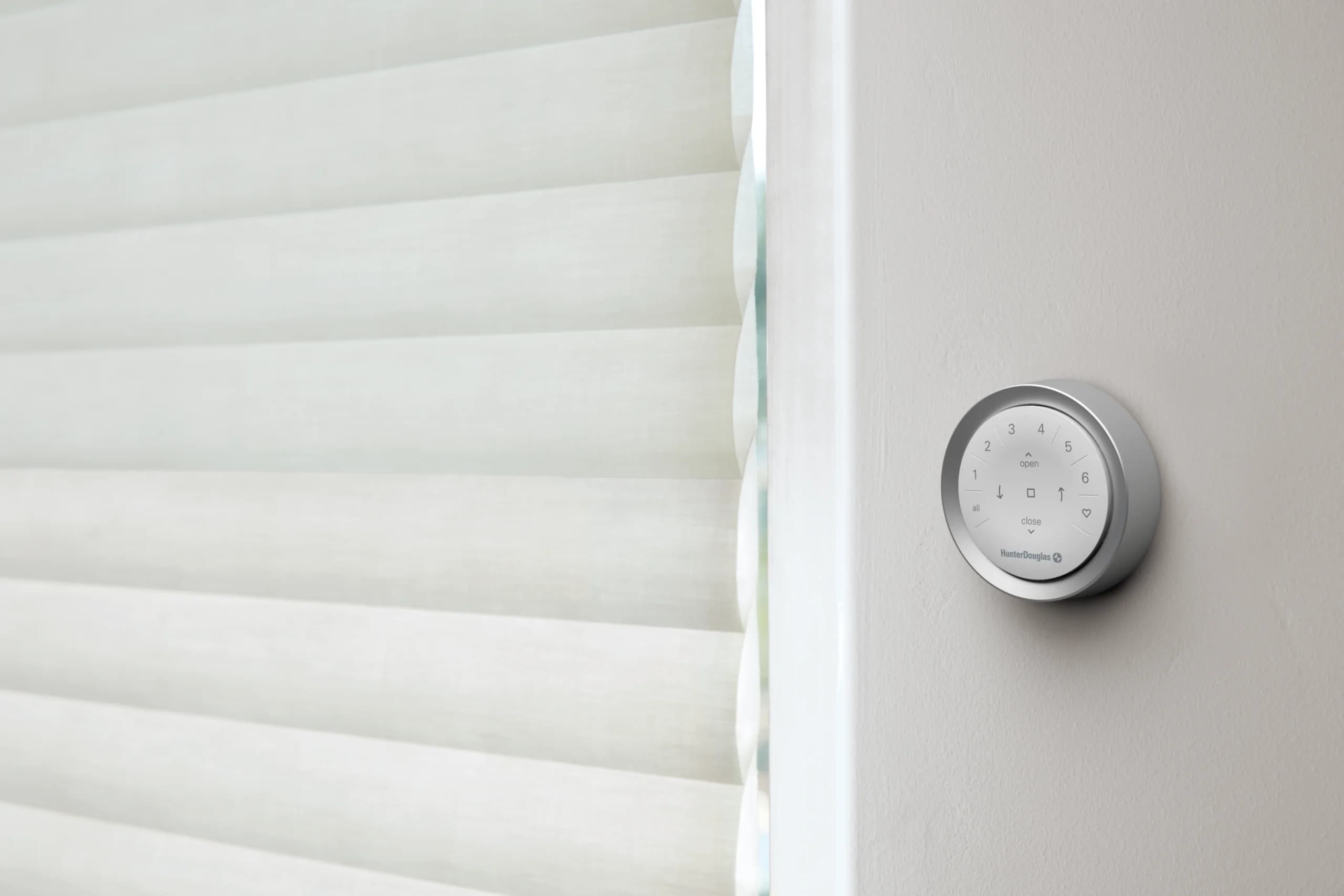
This is where Hunter Douglas earns its reputation. Hunter Douglas Duette® Honeycomb Shades with LightLock® add side channels that overlap the edges of the shade, so light has no path around it. It is the closest thing to genuine darkness I can put in a window, and I have watched it turn a sunlit bedroom to midnight in the middle of the afternoon. Paired with PowerView® Automation, the shade can even close itself on a schedule before you head to bed.
If sleep is the problem, tell me about the room. I bring the actual fabrics to your home, hold them in your own window, and show you the difference between room darkening and blackout in your own light, right at your kitchen table. Request a free in-home consultation or call me at (603) 891-5755.
The PowerView® App is required for programmed operation.