Yes, cellular shades really do lower your heating bill, and the numbers come from the federal government, not a sales brochure. According to the U.S. Department of Energy, about 30 percent of a home's heating energy is lost through its windows, and tightly installed cellular shades can reduce that heat loss through the windows by 40 percent or more. That equates to about 10 percent savings on the energy you use to heat your home.
I am Jim Garrity. I have installed window treatments across New England for more than thirty years, and cellular shades are the product people ask me about most once the first heating bill of the season lands. Stand next to a bare window in Salem in January and you can feel why. The cold pours right through the glass.
How much heat does a house lose through its windows?
More than most people think. The U.S. Department of Energy puts it at about 30 percent of a home's heating energy. The glass is the weakest link in your walls. Even a good double-pane window insulates far worse than the insulated wall around it, so every window in the house is a small open drain on your heating system all winter long.
How does a honeycomb shade hold the heat in?
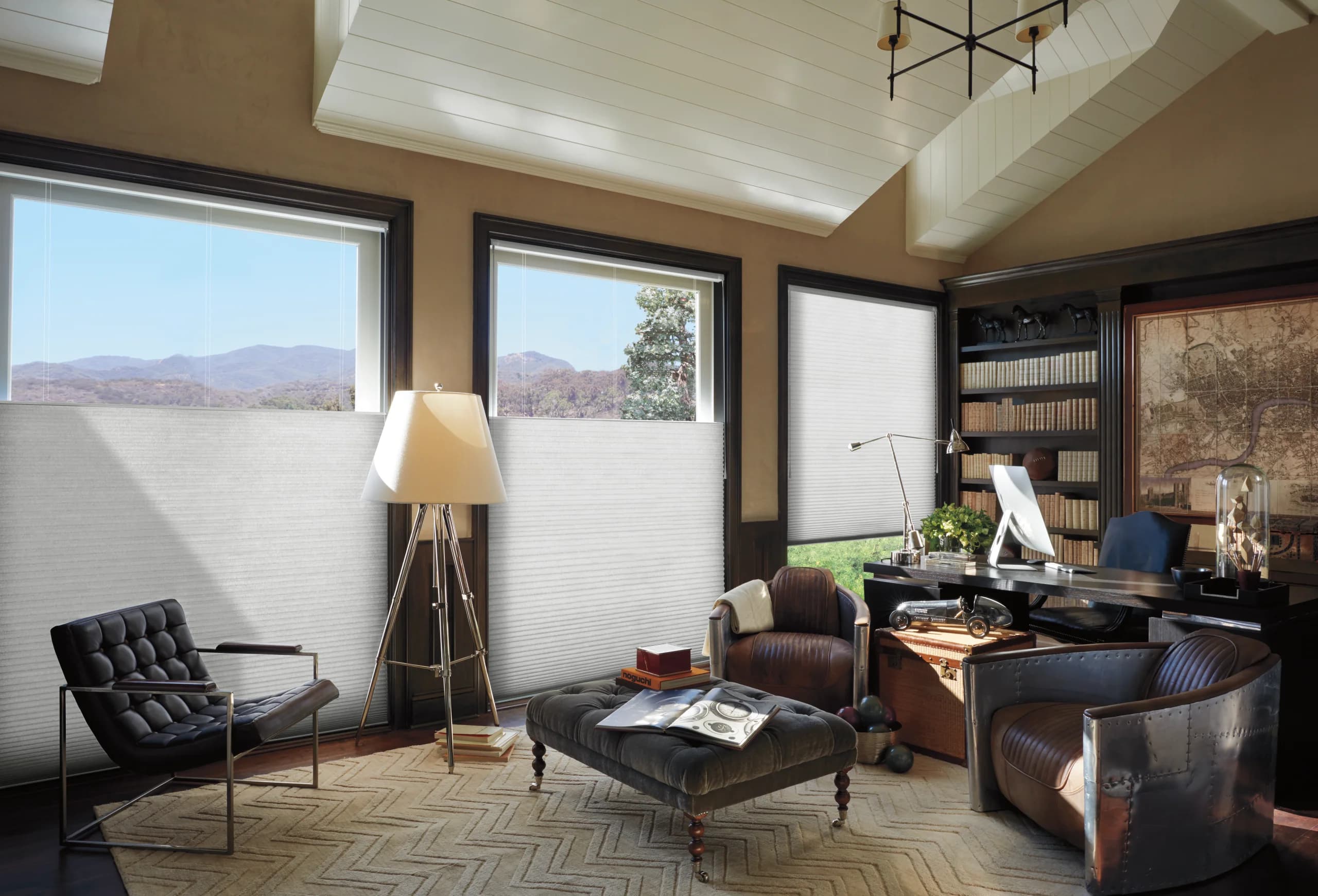
Look at a cellular shade from the side and you see rows of honeycomb-shaped cells. Each cell traps a pocket of still air, and that trapped air is the insulation. Lower the shade and you have put a soft blanket of air between your room and the cold glass. Hunter Douglas Duette® Honeycomb Shades are what I install most, and like every Hunter Douglas product they are backed by the Hunter Douglas Limited Lifetime Warranty, subject to the manufacturer's warranty terms. They earn their keep twice: they insulate all winter and they look beautiful doing it.
What do the numbers actually say?
- About 30 percent of a home's heating energy is lost through windows, per the U.S. Department of Energy.
- In heating seasons, tightly installed cellular shades can reduce heat loss through windows by 40 percent or more, which equates to about 10 percent heating energy savings.
- In cooling seasons, cellular shades can reduce unwanted solar heat through windows by up to 60 percent, so the same shade that warms your winter also cools your August.
- Conventional draperies drawn in cold weather can reduce heat loss from a warm room by up to 10 percent.
This is not just laboratory math. Researchers at Oak Ridge National Laboratory ran a field study on cellular shades in real homes and confirmed the savings. The science and the field data agree: the shade works.
Do drapes do the same job?
Drapes help, and I sell plenty of custom drapery. The Department of Energy found that drawn draperies can cut heat loss from a warm room by up to 10 percent. But a cellular shade sits tight to the glass and traps air in engineered cells, so it does the insulating job better. In a lot of New England homes the best answer is both: a honeycomb shade against the glass for warmth, drapery over it for softness and style.
Why does the installation matter so much?
Notice the Department of Energy says tightly installed cellular shades. That word is doing a lot of work. A shade with gaps at the sides lets warm air slip behind it and wash across the cold glass, and you lose a chunk of the benefit. This is why I measure it, I design it, and I install it myself. A shade cut and fitted to your exact opening is what earns the 40 percent number.
If you want to know what cellular shades would actually save in your house, start with your coldest room. Request a free in-home consultation or call me at (603) 891-5755, and I will bring the samples, take the measurements, and give you an honest answer.